Maintenance of Vertical Greening Systems
| Site: | Arnes Učilnice |
| Course: | Vertical Gardening |
| Book: | Maintenance of Vertical Greening Systems |
| Printed by: | Utente ospite |
| Date: | Wednesday, 3 June 2026, 11:58 PM |
Description
Authors:
Tomaž Čufer, Humko d.o.o.
Dr Sabina Šegula, Biotechnical centre Naklo
Peter Ribič, Biotechnical centre Naklo
Table of contents
- 1. Introduction
- 1.1. The basic needs of plants and the causes of physiological stress
- 1.2. Common pests, diseases and disorders of plants
- 1.3. Techniques of plant replacement
- 1.4. Pruning techniques
- 1.5. The effect of seasonal variation on the maintenance of vertical greening systems
- 1.6. How to check the integrity of the system and how to troubleshoot
- 1.7. How to prepare a maintenance plan
1. Introduction
Living walls are a horticultural challenge which requires good planning, execution and maintenance in order to thrive. It is vital to check the quality of the materials and the method of implementation throughout the process and to pay particularly close attention in the first few months after the wall has been planted. Only a regularly maintained living wall will leave the client and other observers feeling content over the long term. In order to care for and maintain living walls properly, it is vital to possess basic knowledge of plants and their physiological needs, and to know how to identify and treat pests and diseases.
1.1. The basic needs of plants and the causes of physiological stress
1.0.1 Light
Light is an electromagnetic wave. There are three main types:
- Ultraviolet light – short wave length, harmful to plants
- Visible light – medium wave length, comprising different colours. Visible light triggers photosynthesis in plants, photoperiodism (the response of plants to seasonal changes in day length) and phototropism (plants turning towards a light source)
- Infrared light – long wave length, thermal energy
When plants receive adequate light, it stimulates their growth, provides rigidity and woodiness, gives them a pleasant colour, speeds up the fruit and flower production process and creates aromatic substances. When plants do not receive adequate light, however, they tend to grow in length, become soft and pale coloured, lose their variegation, exhibit accelerated root and tuber growth, and produce either little or no aromatic substances. In terms of the requirement for light, the following distinctions can be made between plants:
- Full sun plants, which grow mainly in deserts, steppe and savannah and are able to withstand strong light
- Succulent plants and cactuses
- Shade plants that grow in tropical forest undergrowth and cannot tolerate direct sunlight – they have different leaves and are coloured differently
1.0.2 Temperature
The following temperatures are important for plant growth:
- Minimum temperature – this is the lowest temperature of the day, month or year. This temperature tells us when to protect plants or move them to warmer areas
- Maximum temperature – this is the highest temperature and is often exceeded in greenhouses. Ventilation and shading are necessary to lower it. The maximum temperature for the uptake of food is around 35°C. High temperatures are dangerous in winter, when there is a lack of moisture and light, which can lead to the plants overheating
- Optimum temperature – this is the best temperature for the needs of certain processes (germination at 20–22°C, photosynthesis at 25°C)
- Subsistence – the temperature when the plant is alive but no longer growing (e.g. Kalanchoe can tolerate 12°C)
- Temperature sum – expresses the amount of heat required for plants to grow and develop
Since the pockets in living walls are too shallow and small to fully protect bulbs from very low temperatures, they should not be planted in areas with temperatures of −30°C and below. In areas where winter temperatures are around −10°C or hover around 0°C, living walls can be planted with plants that can withstand lower temperatures and plants that are not so resilient. Thought must be given to the position of the wall when planting because of the impact of high summer temperatures if the wall is facing south. The drying of the substrate and root balls is accelerated by strong winds or constant light winds. It is therefore necessary to take into consideration any exposed areas where there is constant wind at the end and corners of the living wall. Plants in these areas need to be changed more frequently.
1.0.3 Air
Plants need oxygen for respiration, which they receive from the soil through the roots and only a small amount directly from the air. Carbon dioxide also contains oxygen. Carbon is vital for plants since it is used to build tissue. Plants excrete it during respiration and, since it is a relatively heavy element, it accumulates in the lower parts of the atmosphere, which is where plants grow. Most plants grow optimally when the level of carbon dioxide in the air is 10 times higher than the average.
1.0.4 Water
1.0.4.1 Humidity
Humidity concerns the amount of water vapour in the air, which is invisible, and is dependent on the temperature since hot air always holds more moisture than cold air. The amount of water in the air is referred to as the ‘relative humidity’, which means it is compared with the maximum humidity of the air at every temperature. Most plants require relative humidity levels of at least 40% in order to grow properly, and can be grouped as follows:
- Low humidity (40%) - cactuses, succulents
- Moderate humidity (60%) – other ornamental plants
- High humidity (80%) – tropical forest plants
Signs of low humidity include rolling of the leaves, the occurrence of brown spots which look like burns, dry leaf tips, buds falling off, and prematurely withered flowers.
1.0.4.2 Watering
Water in plants serves not only as a means of transport for minerals, but also creates turgidity – pressure in the plant cells. Water causes the plant cells to swell and the sprouts become rigid and upright. If there is a lack of water, the plant withers and may die.
So, when should they be watered? Simply put, when the plant needs it. However, any signs of wilting indicate that the plant has been suffering from drought for some time. They lose their aesthetic appeal, and even emergency watering will not reverse all the damage suffered by the plant. Therefore, it is important to know when to water the plants well and when this is not required.
1.0.5 Substrates
The soil or substrates in which plants are grown are adapted to their specific needs. In this way, we try to imitate the natural growth conditions for the plants as much as possible. It is therefore important to know the geographical origin of each ornamental plant used. Indoor plants are best planted in a substrate adapted to the requirements of particular plant groups. The basic components of the mixture are various ratios of peat and clay. Substrates may be:
- acidic – a pH value below 6.5
- neutral – a pH value of 6.5 to 7.5
- alkaline – a pH value above 7.5
Substrates in living walls vary according to the type of system used. More detailed information may be found in chapters 1.4.2 and 1.5. Different additives perform different functions:
- Charcoal – absorbs excess fertilizers and harmful substances
- Coarse sand – increases the permeability of the substrate
- Lime – reduces the acidity of the substrate
- Humus – binds the nutrients and improves the substrate structure
- Peat moss – accumulates nutrients and water
- Bark – binds water and minerals, improving the permeability of the substrate
1.0.6 Nutrients
In addition to the substances that plants produce themselves during photosynthesis, various macro- and micro-elements are required in order for the plant to grow properly. Signs of nutritional deficiencies include slow or stagnated growth, weak stems, small pale leaves, premature defoliation, limited or no flowering, vulnerability to disease and pests, and the appearance of yellow spots on the leaves. Any plant that does not have a healthy appearance must be reviewed to check for pests and diseases, and the issue should be resolved using an appropriate treatment. Fertilising plants which are in poor health only exacerbates the problem.
Nitrogen takes nitrate form and is important for the green parts of plants. Phosphorus plays a crucial role in root formation, and potassium is needed for the production of leaves, flowers and fruits. These are macronutrients. Plants also need micronutrients in order to develop properly, such as trace elements of iron, manganese, calcium, magnesium and copper. These play an important role in plant photosynthesis and respiration. Signs of nutrient deficiencies include:
- Slow or no growth
- Weak stalks
- Small, pale leaves
- Premature loss of leaves
- Limited or no flowering
- Vulnerability to disease and pests
- The appearance of yellow spots on the leaves
Signs that the plant is receiving too much fertiliser include:
- The leaves are withered or damaged
- The appearance of white clusters in the substrate
- Weak, thin growth in the winter and unusually bulky, compact growth in the summer
- The appearance of brown spots on the leaf surface
- The leaves turn brown and dry at the edges
Revision questions
- What are the main factors affecting the growth and development of plants?
- What are the required levels of relative humidity for succulent plants and tropical forest plants?
- What does turgidity mean?
- Match the explanations on the left with the correct item on the right.
|
Accumulates nutrients and water |
LIME |
|
Increases the permeability of the substrate |
PEAT MOSS |
|
Reduces the acidity of the substrate |
BARK |
|
Binds water and minerals, improving the permeability of the substrate |
CHARCOAL |
|
Absorbs excess fertilizers and harmful substances |
HUMUS |
|
Binds the nutrients and improves the substrate structure |
COARSE SAND |
1.2. Common pests, diseases and disorders of plants
This section covers the main pests, diseases and other disorders that are likely to affect living walls. Because living walls are normally situated in the public realm, the methods of treating pests and diseases differ from those used commonly in gardens. Instead of using systemic pesticides or fungicides, biological solutions need to be administered through the irrigation system of the living wall.
Plant diseases
Plant diseases are divided into four types: physiological, fungal, bacterial and viral.
Physiological diseases
Many of the diseases suffered by ornamental herbaceous plants are the result of poor care: excessive or insufficient watering, excessive temperature fluctuations, draughts, damage due to solar radiation, lack of light, etc. The most common cause of plant disease is related to watering. If not cared for properly, the roots begin to rot because the substrate contains too much water and lacks air. Various fungi and bacteria develop, which cause diseases to develop. Temperature fluctuations cause the leaves to shed. A strong rise in temperature causes some plants, such as violets, to discard their flower buds. Therefore, high levels of humidity must be ensured during periods of high temperatures. Draughts cause the leaves of many plants to darken or even fall off. If a plant lacks light, its growth will stagnate and its flower buds will be shed. Coloured leaves will turn green. A lack of humidity causes leaf tips to dry and the edges of the leaves to turn brown. There are various ways in which this can be prevented by raising the humidity levels. A lack of certain macro- and micronutrients causes physiological disorders such as sallowness and retarded growth.
Fungal diseases
Good drainage should be provided and excessive watering avoided. In the event of damage, the affected parts of the plant should be removed with care so as not cause any further damage, and burnt. Fungal infections can be treated with biological fungicides administered through the irrigation system. The main fungal diseases are grey mould, mildew, rust and root rot.
a) Grey mould
Grey mould is the most common plant disease, and all herbaceous species are particularly susceptible. It is caused by Botrytis cinerea, whose spores are spread by rain or wind. A grey fungal coating appears on the leaves, causing them to grow poorly and change in colour.
The plant may wither quickly. The fungus develops rapidly in humid conditions and poor air circulation. Plants which are already damaged are the first to get infected.
b) Powdery mildew
Powdery mildew is caused by various fungi, mostly Sphaerotheca, Uncinula and Oidium, whose spores are spread by the wind and rain. Mildew also occurs in dry conditions. Fungal growth appears on the leaves in the form of a white powder. At first, it emerges on the upper sides of the leaves before spreading over the entire plant. After some time, violet staining develops, the leaves turn yellow and they fall off. Both the buds and the flowers are affected.
c) Rust
Rust appears on the surface of plants. It is most commonly caused by Puccinia and Melampsora fungi, whose spores are spread by the rain and wind. The stems develop small corns which contain pale and dark brown spores. In cases involving leaf infection, spores develop on the underside of the leaves and the upper side turns yellow. The leaves fall off quickly, and the plants wither with major infections. Rust can also occur on the flowers. The outer petals turn brown and major infections cause the flower head to fully collapse.
d) Root rot
|
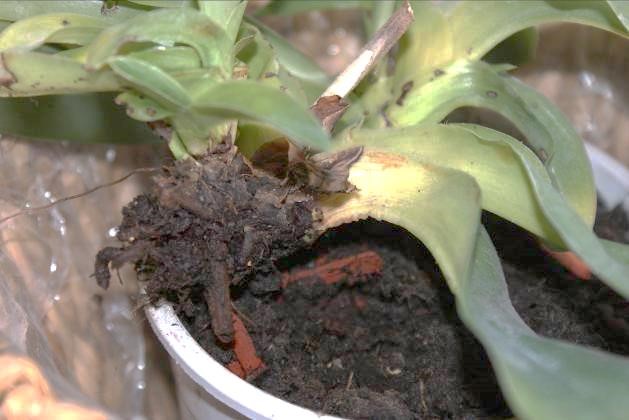
Root rot is caused by a number of soil fungi. The roots darken and begin to rot. Since the roots are unable to draw water, the plant shows signs of withering. The main cause of this disease is excessive watering.
Bacterial diseases
Infected plants need to be removed and destroyed. The substrate around a diseased plant also needs to be removed, as do any pests (especially slugs and snails) which may damage the plants or enable the infection to spread. The main bacterial diseases are leafy gall and crown gall.
a) Leafy gall
Leafy gall is caused by the phytopathogen Rhodococcus fascians that lives in the substrate. Small disfigured sprouts and leaves appear on the stems of the plants in contact with the substrate. The bacterium spreads rapidly and infects damaged plants. The plants wither away.
b) Crown gall
Crown gall is caused by the soil bacterium Agrobacterium tumefaciens which lives in moist substrate. The bacterium enters the plant through damaged areas. It causes changes in the roots, where irregular round swelling develops. Changes may also be seen in the stem. The plants’ growth stagnates but they survive.
Viral diseases
Viruses can affect all plants. They cause their leaves to curl and become smaller, accompanied by the appearance of a mosaic discolouration, various miscellaneous rings, patches, etc. Viral diseases may also be spread by pests (e.g. lice) which transmit sub-microscopic virus cells by sucking plant sap from infected plants. Plants with a viral disease need to be removed and destroyed.
Plant pests
Aphids
Aphids can be different colours, including black, brown, grey, green and light yellow. They suck plant sap and reproduce very quickly. The loss of sap causes the plants to become weak and aphids also transmit viral infections and excrete honey dew, which makes the leaves sticky and turn black due to soot mould infection. Aphids can be removed manually or by using a biological insecticide administered through the irrigation system.
Mealybug
|
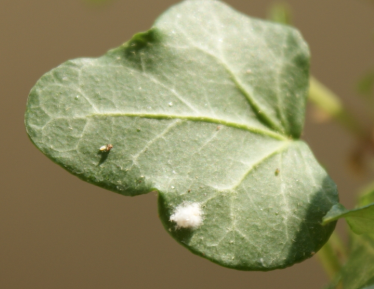
Mealybugs (Pseudococcus, Planococcus) are oval shaped, white, 0.5 cm large, wingless and covered with a woolly white wax which protects them from water and contact insecticide. They appear on the leaf axis as a white fluffy substance. They suck plant sap and excrete honey dew. Mealybug can be treated by using a biological insecticide administered through the irrigation system.
Scale insects
|
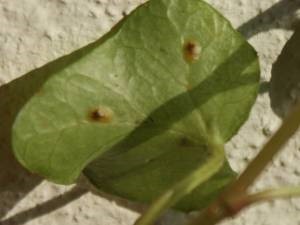
Scale insects include species such as Coccus hesperidum, Lepidosaphes ulmi, and Pulvinaria regalis. Scale insects are mostly brown-yellow in colour and settle in the less accessible parts of the plant. The plant’s leaves become sticky due to the honey dew they secrete. A symptom of scale insect infection is usually black soot (the leaves turn black). The young larvae are moving but the older animals are immobile, and they suck the plant sap under the protective cap. Scale insects can be treated by using a biological insecticide administered through the irrigation system
Mites
Source: Sabina Šegula |
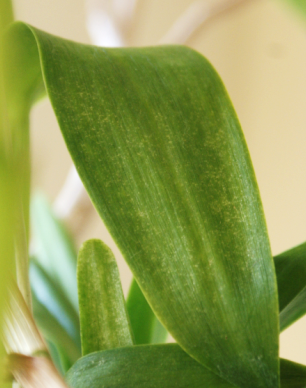
Leaf miners
Leaf miners are the larvae of small flies. They eat the tissue between the leaf’s upper and lower epidermis making hollow tunnels in the leaves. They destroy much of the lamina in a short period of time. The damaged leaves should be removed. Spray the entire plant with a systemic insecticide. A biological insecticide can be administered through the irrigation system.
Thrips
Thrips are brownish insects with a narrow body of up to 2 mm in length, sometimes crossed by pale bands. The young larvae are yellow-orange in colour, up to 1 mm in length and feed as adult animals on the upper side of the leaves. They thrive in hot and dry conditions. When thrips feed on plants, the upper surface of the leaves turns silvery-white and white spots appear on the petals.
In cases of severe infection, the loss of flower pigmentation is more pronounced, the buds fall off and the leaves are badly damaged. Species of thrips that might be found on living walls include:
- Banded palm thrips (Parthenothrips dracaenae) which occurs all year round on various houseplants, especially those with relatively tough leaves such as Ficus, Dracaena, Citrus, Monstera, and
- Western flower thrips (Frankliniella occidentalis) attacks the foliage and/or flowers of many houseplants, especially Streptocarpus, Saintpaulia, Fuchsia, Gloxinia, Achimenes, Pelargonium, Cyclamen, Chrysanthemum, Verbena, and Impatiens.
- Onion thrips (Thrips tabaci) attacks a wide range of garden plants, including Dianthus Chrysanthemum, Begonia, Cyclamen, and Dahlia.
A biological insecticide can be administered through the irrigation system. Further infections can be avoided by keeping the plants regularly watered and by maintaining a moist environment.
Snails
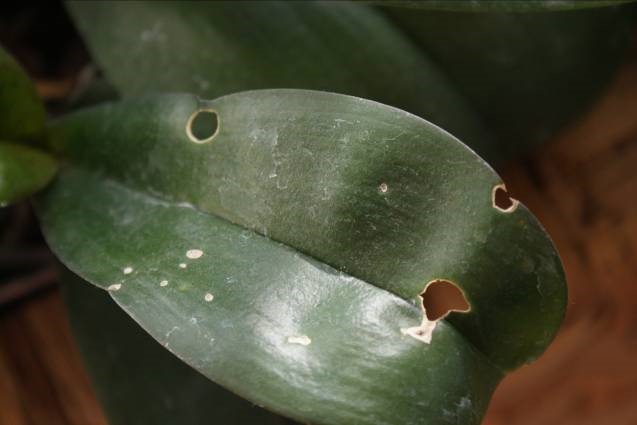
If not noticed in time, snails can eat away at the leaves and the plants lose their aesthetic value. Holes appear in the leaves and the stems may be peeled away. There can be traces of silvery slime seen on the surface of the plant. Due to the higher levels of moisture in the air, they only eat at night. The snails should be removed by hand.
|
Resources
- Grey mould
https://www.rhs.org.uk/Advice/Profile?PID=165
- Powdery mildew
https://www.rhs.org.uk/Advice/Profile?PID=165
- Rust
https://www.rhs.org.uk/advice/profile?PID=756
- Leafy gall
https://www.rhs.org.uk/Advice/Profile?PID=211
- Crown gall
https://www.rhs.org.uk/Advice/Profile?PID=141
- Aphids
https://www.rhs.org.uk/advice/profile?pid=181
- Mealy bugs
https://www.rhs.org.uk/advice/profile?pid=201
- Scale insects
https://www.rhs.org.uk/Advice/Profile?PID=224
- Mites
https://www.rhs.org.uk/Advice/Profile?PID=190
- Leaf miners
http://www.hortweek.com/pest-disease-factsheet-leaf-miners/ornamentals/article/1299549
- Thrips
1.3. Techniques of plant replacement
Techniques of plant replacement vary depending on the type of living wall system:
- Geotextile mats – small plants can be easily pulled out and replaced by new ones, but larger ones whose roots have grown into the felt will need to be cut out and a new patch of non-woven textile sewn in before replanting.
- Modular panels – large plants are comparatively easy to remove, unless their roots have become entangled with those of other plants, in which case they will need to be cut with a knife. The pot size of the replacement plants must fit exactly into the holes in the panel. The replanted plants need special care for first few weeks while they grow into the growing medium.
- Pots and troughs – plants in individual pots are easy to replace, while large plants in troughs may need to be cut out if their roots have become entangled with those of other plants.
Always use a substrate similar to the existing one, unless it is too dry or too wet most of the time. If so add black peat, compost or zeolite to make a denser substrate with higher water retention, or perlite to make it lighter and more porous.
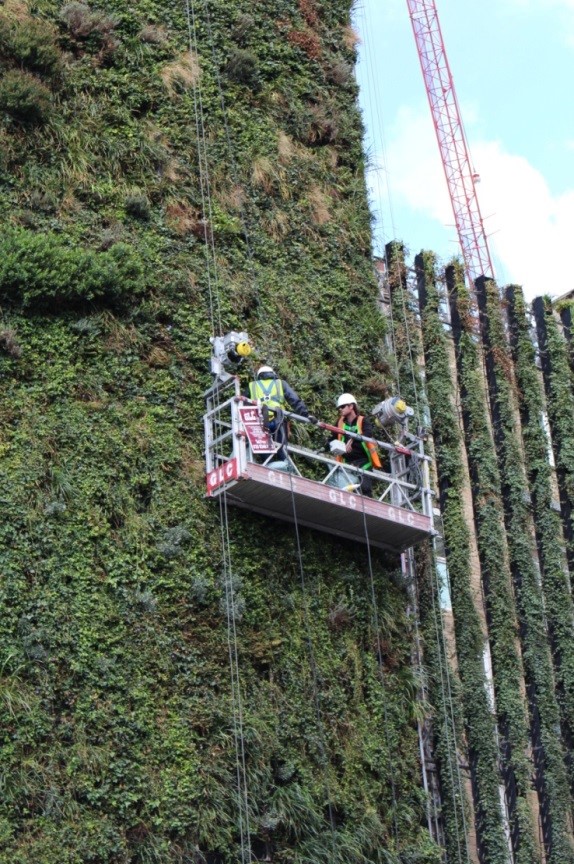
Living walls should be replanted using the appropriate safety equipment for working at height (see chapter 2.1). Alternatively, modular panels may be removed, replanted and returned to the living wall.
|
|
1.4. Pruning techniques
All herbaceous perennials and ornamental grasses that die back in winter can be cut back, either in autumn or spring [1, 2]. Trimming perennials after flowering finishes will help improve their appearance, and will also improve their flowering the following year. However, you can leave some stems over winter to provide homes and food for wildlife, and then trim back in spring. Evergreen perennials and ornamental sedges are not cut back, but are tidied during spring and summer by removing dead foliage. More tender plants with woody stems, such as penstemon are left so that the old stems protect the crown from frost. Leave pruning of these and other borderline-hardy perennials until the risk of frost has passed – usually April or May.
Cutting back after flowering
Early-flowering perennials are cut to near the base after flowering to encourage fresh foliage and late summer flowering. These are then cut back again in autumn or spring.
- Using a knife, shears or secateurs, cut stems close to the ‘crown’ or dormant base of the plant
- If there is any young growth, cut to just above it
- Any attractive dead stems or flower heads can be left until early spring
- Remove diseased material (showing signs of leaf-spots, mildew and rusts, for example).
Cutting back in spring
Dead herbaceous plants and grasses over winter to provide structure and interest, as well as food and shelter for wildlife. However, more care is needed when cutting back in spring to avoid damaging new shoot growth. In case of earlier-than-expected growth of perennials in spring, rather than cutting out new growth, merely tidy up the plants by pulling out dead stems.
- Using a knife, shears or secateurs cut stems close to the ‘crown’ or dormant top of the plant, avoiding the removal of new shoots
- In spring, new growth arises from the base of herbaceous plants (including grasses) that die back to ground level over winter. This is best not removed during cutting back
- Evergreen perennials, or those such as penstemon, that should survive the winter in milder areas, may either shoot from the base or from branching points higher up the old shoots. Where growth arises purely from the base, cut the old stems back entirely to within a few centimetres of the base, leaving the new shoots open to light and air. Where growth arises higher up, simply shorten the old stems, cutting to just above a healthy leaf, branch or bud
Resources
- RHS Pruning Groups – how to prune various types of plants
https://www.rhs.org.uk/advice/profile?PID=954
- Perennials: cutting back
1.5. The effect of seasonal variation on the maintenance of vertical greening systems
The effects of seasonal fluctuations are more strongly pronounced for exterior living walls than for their interior counterparts. Seasonal changes affect the ambient temperature, solar radiation, humidity, drought, frost and biological growth of plants. As a result, the growth of the plants accelerates or slows down, the level of evapotranspiration changes, and the need for nutrients and the use of different nutrients at different stages of growth can fluctuate accordingly.
External living walls
The physiological conditions in exterior green walls that can adapt to the need of the plants are regulated in accordance with seasonal influences:
Spring growth
Moderate watering is required so that the substrate is mildly moist, using appropriate phosphorous fertilisers to improve root development, fertilising via the roots and leaves.
Summer growth
Heavy watering is required due to the increased levels of evapotranspiration. The fertiliser should contain a high dose of potassium, and control of pests and diseases should be increased, especially during wet periods.
Autumn growth
Moderate watering is required, using fertilisers with a high dose of potassium and humic acids in order aid the plant’s preparations for hibernation.
Winter hibernation
There is a threat of winter drought in February when the water in the substrate may be frozen and the level of sun radiation is already high. It is vital to water and spray evergreen plants regularly during sunny weather using warm water. Since the plants do not produce biomass during this phase, fertigation is not necessary. Deciduous perennials and small shrubs should be watered occasionally during good weather, which dries out the substrate in living walls.
Internal living walls
In interior living walls, the impact of the changing seasons is reflected in the reduction of natural lighting and humidity due to heating. Cold draughts might occur due to the close proximity of doors, which adversely affect the growth of indoor plants. Therefore, the level of watering and fertigation used for interior walls follows a similar process to that used for exterior walls.
Spring
The fertilisers need to contain more nitrogen in order to encourage plant growth. Only moderate watering is required; better too dry than too wet. Lighting needs to be between 800–1200 lux for at least 12 hours a day.
Summer
The fertilisers used need to contain appropriate proportions of nitrogen and potassium in order to achieve more compact growth. Calcium and magnesium need to be added when using soft water for irrigating. The level of watering is the same as for spring. Lighting needs to be between 800–1200 lux for at least 12 hours a day.
Autumn
The fertilisers need to contain a high level of potassium, bio-activators and microelements. The level of irrigation should be moderate; better dry than wet. Lighting needs to be between 1200–1400 lux for at least 12–14 hours a day.
Winter
The fertilisers need to contain a high level of potassium, bio-activators and microelements. Irrigation should be moderate; better dry than wet. Lighting needs to be between 1200–1400 lux for at least 12–14 hours a day.
1.6. How to check the integrity of the system and how to troubleshoot
Regular maintenance work should be carried out either monthly or every three to six months. Standard periodic maintenance procedures are as follows:
Plant health
It is necessary to assess the plants in terms of their health and general physiological appearance. If pests or diseases are identified, systemic treatments need to be administered through the irrigation system. Treatment should be repeated periodically in order to completely eliminate the pests and diseases concerned. In the event of severe pest attacks, the plants will need to be replaced. If certain nutrients are lacking, foliar fertigation should be carried out using appropriate water-soluble fertilisers or foliar fertilisers.
Substrate moisture
If the level of moisture is too low or too high, the timing or frequency of irrigation must be regulated. Dielectric humidity sensors may need to be re-positioned. These oxidise after a few months and will need to be replaced.
Concentration of nutrients
This is checked using an electrical conductivity (EC) meter. If the EC is too high, the reservoir must be emptied and refilled with water and a review conducted on the nutrients added. Since water flushes nutrient salts when circulating through the substrate, thereby causing the water to become oversaturated with salt, the reservoir should be emptied after five to ten fillings with water and fertilisers.
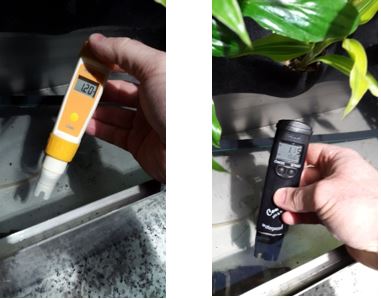
pH of the water
This is checked using a digital pH meter. If the pH is too high, the appropriate amount of acid needs to be added in order to soften the water. If the pH is too low, pure water is added or the reservoir is emptied and refilled.
Irrigation system
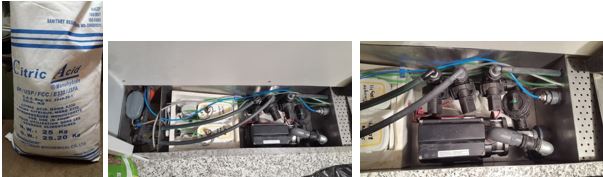
If the system allows, check the water level in the reservoir. If water does not flow into the reservoir, check the functioning of the solenoid valve and whether there is any water in the water distribution system. CaCO3 may cause the float switches and solenoid valves to get stuck. If so, the CaCO3 can be dissolved using citric acid. The drip emitters need to be checked to see whether there are any dry areas in the substrate. If the drip irrigation system does not work, acid fertiliser such as Pekacid can be used to clean it, or the emitters and hoses need to be replaced. The water filter needs to be cleaned periodically every month; the functioning of the pump needs to be checked every three months if it reaches the set pressure.
Automation system
The functioning of the automation process needs to be checked, including the time settings and duration of watering, the moisture levels, lighting and the fertiliser doses. If the parameters have changed, they can be adjusted to their pre-set levels. All levels need to be digitally archived.

Lighting system
High-pressure sodium spotlights need to be replaced after 15,000–20,000 hours of use.
1.7. How to prepare a maintenance plan
How to prepare a maintenance plan
The maintenance of living walls follows similar principles to that of the maintenance of plants in gardens. Fundamentally plant and garden maintenance is generally presented in a visual matrix format consisting of tasks versus timings. As with gardens, specific maintenance tasks and timings depend on the scenario. Important parameters that vary from situation to situation typically include:
- internal or external installation
- type of living wall system
- plant species
- location (climate)
- micro climate (aspect)
This section aims to identify the typical maintenance tasks that are associated with and peculiar to living walls. Tasks that need to be considered are discussed below. Students should learn to synthesise their prerequisite knowledge of garden and plant maintenance with the situational parameters and the more specific activities for producing a living wall management plan.
Plants
Ideally the plants should be inspected once a month to ensure that they are free from pests and diseases, and to enable plants to be replaced as necessary. In addition, different plants have different requirements in terms of pruning or tidying, and these maintenance tasks take place at different times of year (see unit 4.4). The following examples of plants commonly grown in living walls illustrate this variability:
- Hylotelephium spectabile – cut back after flowering to maintain shape or leave seedheads overwinter
- Thymus ‘Doone Valley’ – clip to shape with secateurs after flowering (Pruning Group 10)
- Bergenia ‘Pink Dragonfly’ – remove faded flower spikes
- Carex oshimensis ‘Evergold’ – in summer cut out any dead leaves
- Ajuga reptans – no pruning required
- Pachysandra terminalis – no pruning required
Systems
In addition to the regular maintenance tasks (see unit 4.6), different systems require different levels of maintenance. The irrigation plant room and substrate moisture should be physically checked once a month, while ideally the irrigation log and moisture metres should be checked remotely on a daily basis. Nutrient and pH levels should be checked every month, and the lighting system every 3 months.
Example of a maintenance matrix
Table 12: Example of maintenance matrix
|
Maintenance operation |
J |
F |
M |
A |
M |
J |
J |
A |
S |
O |
N |
D |
|
Monthly inspection of the wall: substrate moisture, plant health |
* |
* |
* |
* |
* |
* |
* |
* |
* |
* |
* |
* |
|
Prune, tidy and replace plants as necessary |
|
|
|
|
* |
|
* |
|
* |
|
|
|
|
Add biocontrols to the irrigation system |
|
|
|
|
* |
|
|
|
|
* |
|
|
|
Daily check of remote sensing irrigation log and moisture metres |
* |
* |
* |
* |
* |
* |
* |
* |
* |
* |
* |
* |
|
Monthly inspection of irrigation plant room |
* |
* |
* |
* |
* |
* |
* |
* |
* |
* |
* |
* |
|
Test nutrient concentration |
* |
* |
* |
* |
* |
* |
* |
* |
* |
* |
* |
* |
|
Top up nutrient tank |
|
|
* |
|
|
* |
|
|
* |
|
|
|
|
Flush out irrigation lines |
|
|
|
|
* |
|
|
|
|
* |
|
|
|
Pressure test irrigation system |
|
|
|
* |
|
|
|
|
* |
|
|
|
|
Test water pH |
* |
* |
* |
* |
* |
* |
* |
* |
* |
* |
* |
* |
|
Check automation system |
|
|
|
|
* |
|
|
|
|
* |
|
|
|
Check lighting system |
|
|
* |
|
|
* |
|
|
* |
|
|
|