Angleščina, 8. r./5. sk. (Črešnar)
Angleščina, 8. r./5. sk. (Črešnar)
Before we begin today's lesson: the "winner" of the "Trip to Edinburgh is..."
Well, this was hard. If I had to pick one offer, it would be Živa's offer - it had the most specific information, I liked what I saw and it wasn't too expensive.
BUT - in reality - what I'd do is:
Maša's plane tickets - no contest, cheapest flight wins.
Živa's hotel - looks amazing and it's very affordable for what it offers.
Tilen's (and Benjamin's) restaurants - my GOD that Hawk's sandwich bar. And Bento's. And the Scottish Hog roast?! Yeesh. Good thing I already ate :)
A mix of various activities: someone recommended a whiskey distillery. Sold! Camara Oscura? Sold! Trip to Loch Ness? Sign me up!
Thank you for participating in this wonderful exercise. I had a lot of fun reading through your deals and I hope you had fun making them. Now, on to today's lesson!
Tema ure: MODAL VERBS CAN, MUST, HAVE TO, SHOULD
Cilj ure: ponovitev uporabe naklonskih glagolov can, must, have to in should
Predviden čas dela: 25 min
TASK 1
Today we are going to revise the formation and use of the modals verbs CAN; MUST, HAVE TO and SHOULD.
1. What can CAN express?

Modalni glagol CAN lahko izraža zmožnost, verjetnost, dovoljenje, ko nekaj ponudimo.
2. What is the differece between MUST and HAVE TO?

Have
to in must oboje pomeni MORATI. Pa vendar je med njima razlika v
uporabi. Must se uporablja večinoma, kadar o nujnosti dejanja sporoča
govorec in s tem izraža svoje mnenje. Ravno tako se must načeloma
uporablja za opis pravil. Have to pa uporabljamo, kadar nam nekdo drug
veli, da moramo dejanje storiti. Ravno tako pa have to uporabljamo za
opisovanje dejstev.
3. What do SHOULD and SHOULDN'T express?
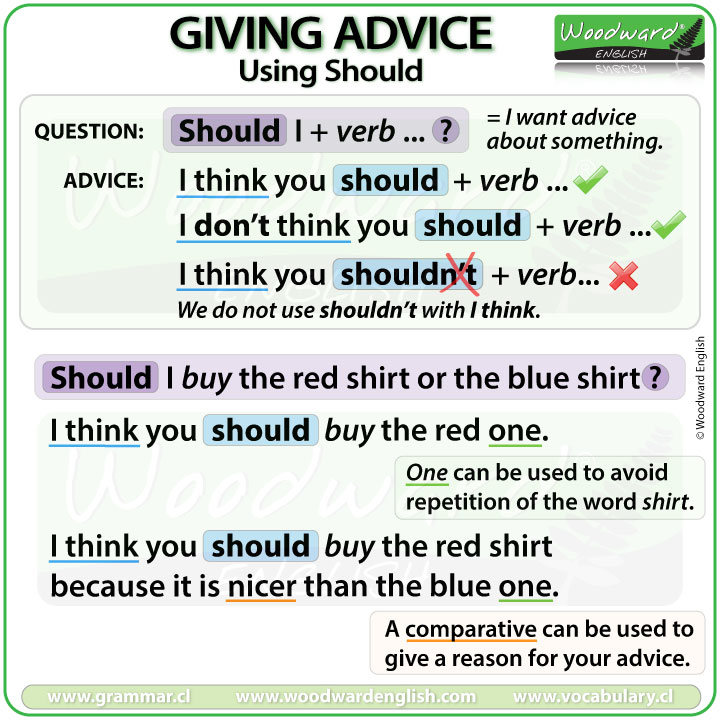
Should izraža nasvet.
TASK 2
Now that we have revised the theory, let's move on to some practice.
Open your workbooks and do exercises 50,51, 52 and 53 on pages 173/174.
Sedaj pa odprite delovni zvezek in rešite vaje v delovnem zvezku na straneh 173 in 174.
All done for today!